
2022
Earth's Southernmost Volcanoes: Mantle Sources Beneath East Antarctica
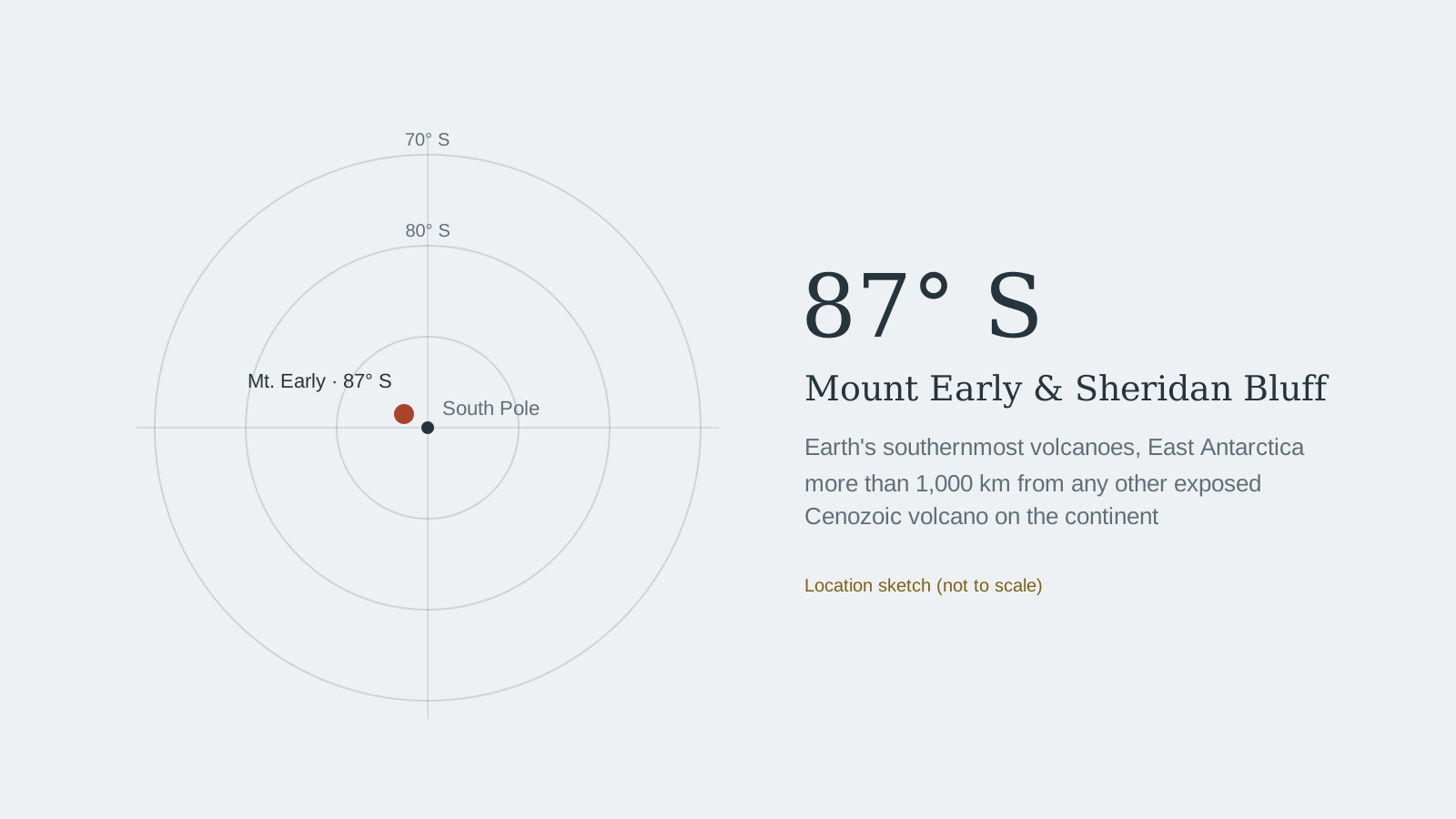
Mount Early and Sheridan Bluff, at 87° S, are the southernmost volcanoes on Earth and lie more than 1,000 km from any other exposed volcano of the Cenozoic era (the last 66 million years) in Antarctica. Before my Ph.D., I used mineral chemistry and isotopes to trace where their magmas came from; the work contributed to a study led by Kurt Panter.
The question
Why is there volcanism at all in the interior of the East Antarctic continent, and what kind of mantle melted to produce it?
What I did
I analyzed olivine crystals with an electron microprobe, measured their oxygen isotopes by laser fluorination, and combined these results with whole-rock chemistry and strontium, neodymium, and lead isotopes in melting and mixing models.
What we found
The two basalt types formed by roughly 5–6% and 1.5–2% melting of a mantle that varies on a small scale and draws on at least two distinct sources. The study proposes that dense lower continental lithosphere detached and sank, releasing fluids that triggered melting.
Why it matters
The work offers an explanation for isolated volcanism deep within a continent and was published in Contributions to Mineralogy and Petrology (Panter et al., 2022).